Price range: $1.65 through $49.50

Tricyclic Antidepressant

Product Information

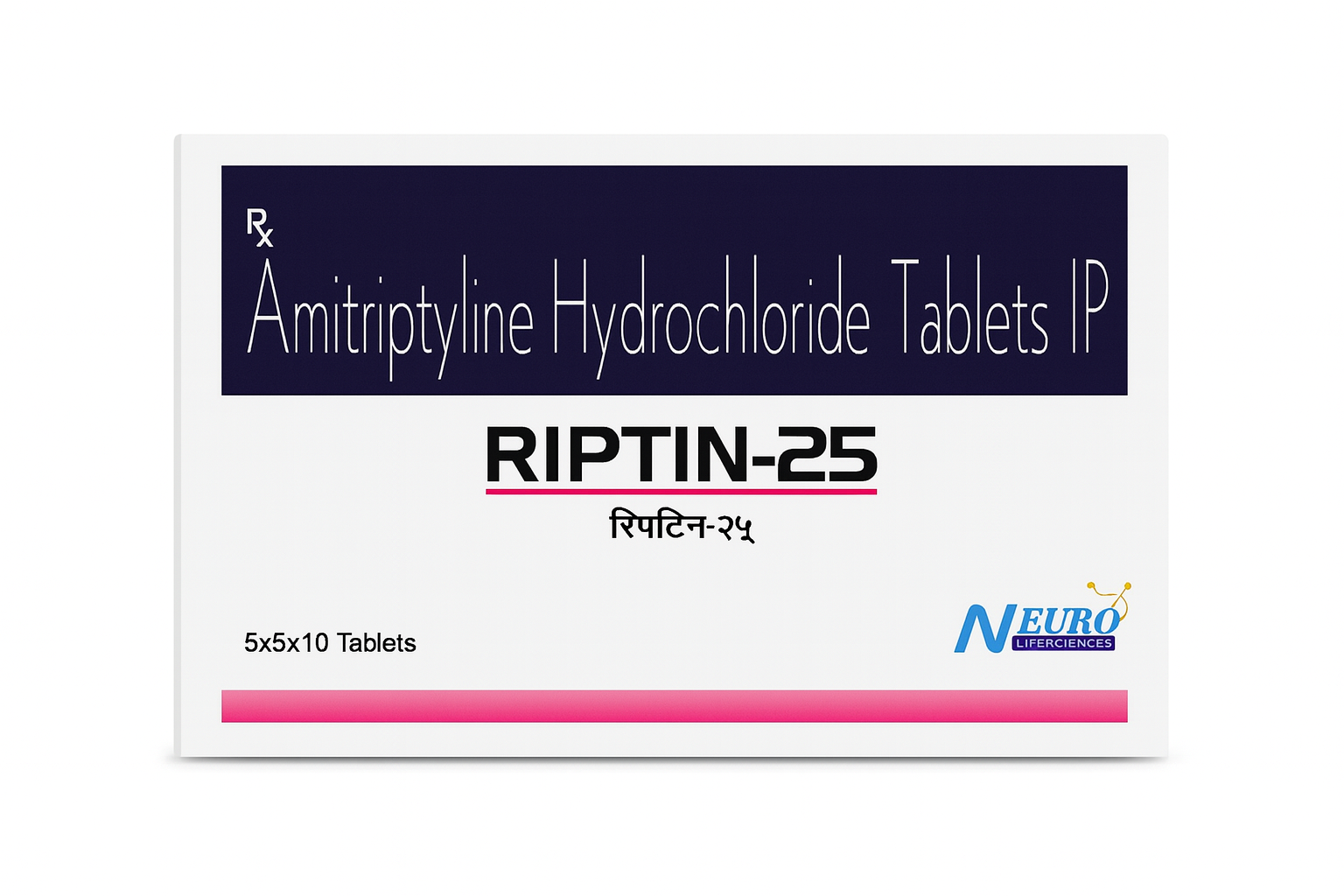
Riptin 25 mg Tablet belongs to a group of medicines called tricyclic antidepressants. It is used to treat depression, neuropathic pain, chronic tension-type headache, and migraine in adults. It may also be prescribed to treat bedwetting at night (nocturnal enuresis) in children aged 6 years and above.

It works by increasing levels of natural substances in the brain (serotonin and norepinephrine) that help regulate mood and block the transmission of pain signals, providing relief from depression and neuropathic pain.

Why is this Medication Prescribed?

Riptin is prescribed for:

  • Depression and mood disorders

  • Neuropathic (nerve-related) pain

  • Chronic tension-type headaches

  • Migraine prevention

  • Night-time bedwetting in children (over 6 years, when prescribed by a doctor)

Uses

  • Treatment of major depression

  • Relief of neuropathic pain

  • Management of chronic headaches and migraines

  • Control of bedwetting in children (age 6+)

Benefits

  • Improves mood and mental balance

  • Reduces pain signals in the brain and spinal cord

  • Helps prevent headaches and migraines

  • Provides long-term relief when taken as prescribed

How Should this Medicine be Used?

  • Take Riptin exactly as prescribed by your doctor.

  • May be taken with or without food.

  • Tablets: Swallow whole with a glass of water. Do not chew or crush.

  • Liquid: Measure carefully with the cup provided and shake well before use.

  • Continue for the full duration prescribed. Do not stop suddenly without medical advice.

  • Rise slowly from sitting or lying position, as the medicine may cause dizziness (orthostatic hypotension).

Other Uses

May sometimes be used in other conditions if recommended by your doctor (e.g., certain chronic pain disorders).

⚠️ Suicide & Mental Health Risk Warning

This medicine may increase the risk of suicidal thoughts or worsening depression, especially when starting treatment or changing the dose.

  • Monitor for mood changes, agitation, or unusual behavior.

  • Inform your doctor immediately if you or your family notice concerning changes.

  • Emergency care may be required if you experience suicidal thoughts.

⚠️ Respiratory Depression Warning

When combined with sedatives, opioids, or alcohol, this medicine may excessively slow or suppress breathing.

  • Do not exceed prescribed doses.

  • Avoid alcohol or other sedatives unless approved by your doctor.

  • Seek urgent help if you experience extreme drowsiness, slow breathing, or unresponsiveness.

Special Precautions

Tell your doctor if you have or have had:

  • Recent heart attack, heart rhythm problems, or severe liver disease

  • Glaucoma, thyroid problems, or pheochromocytoma

  • Seizures, bipolar disorder, schizophrenia, or depression with suicidal thoughts

  • Diabetes or kidney problems

  • Bone marrow suppression or history of low blood counts

Important precautions:

  • Avoid alcohol (increases drowsiness).

  • May cause dizziness, sleepiness, and blurred thinking — do not drive unless alert.

  • Should not be used in children for depression or neuropathic pain.

  • Only for bedwetting in children over 6 years when prescribed.

  • Use with caution in elderly patients.

Possible Side Effects

Common side effects include:

  • Sleepiness, drowsiness, dizziness

  • Dry mouth, constipation, nausea

  • Weight gain

  • Headache

  • Slurred or slow speech

  • Stuffy nose

  • Irregular heartbeat

Seek urgent medical attention if you experience:

  • Severe or worsening depression or suicidal thoughts

  • Fainting, palpitations, or chest pain

  • Seizures or confusion

  • Severe allergic reaction (rash, swelling, breathing difficulty)

Storage & Disposal

  • Store in a cool, dry place away from sunlight.

  • Keep out of reach of children.

  • Do not use after the expiry date.

  • Dispose of unused tablets safely — do not flush down the toilet.

Emergency Guidance

  • Overdose: Seek emergency help immediately. Symptoms may include severe drowsiness, confusion, seizures, or irregular heartbeat.

  • Suicidal thoughts: Call emergency services or go to the nearest hospital right away.

  • Severe allergic reaction or breathing difficulty: Seek urgent medical care.